Before choosing a room, decide what the visitor should understand or feel.
Company profiles, catalogues and workshop photographs often tell disconnected stories. A showroom connects history, product applications, manufacturing and quality along a route visitors can explore at their own pace.
A small, deliberate set of material
- A public company profile and history
- Clear photographs, dimensions and uses of key products
- Approved process, quality and workshop information
- Visitor groups, intended uses and a contact route
- Identify three to five questions customers need answered
- Organize around product applications and supporting process evidence
- Plan the entrance, walls and sample displays for free exploration
- Check reading, movement and image clarity on phones and computers
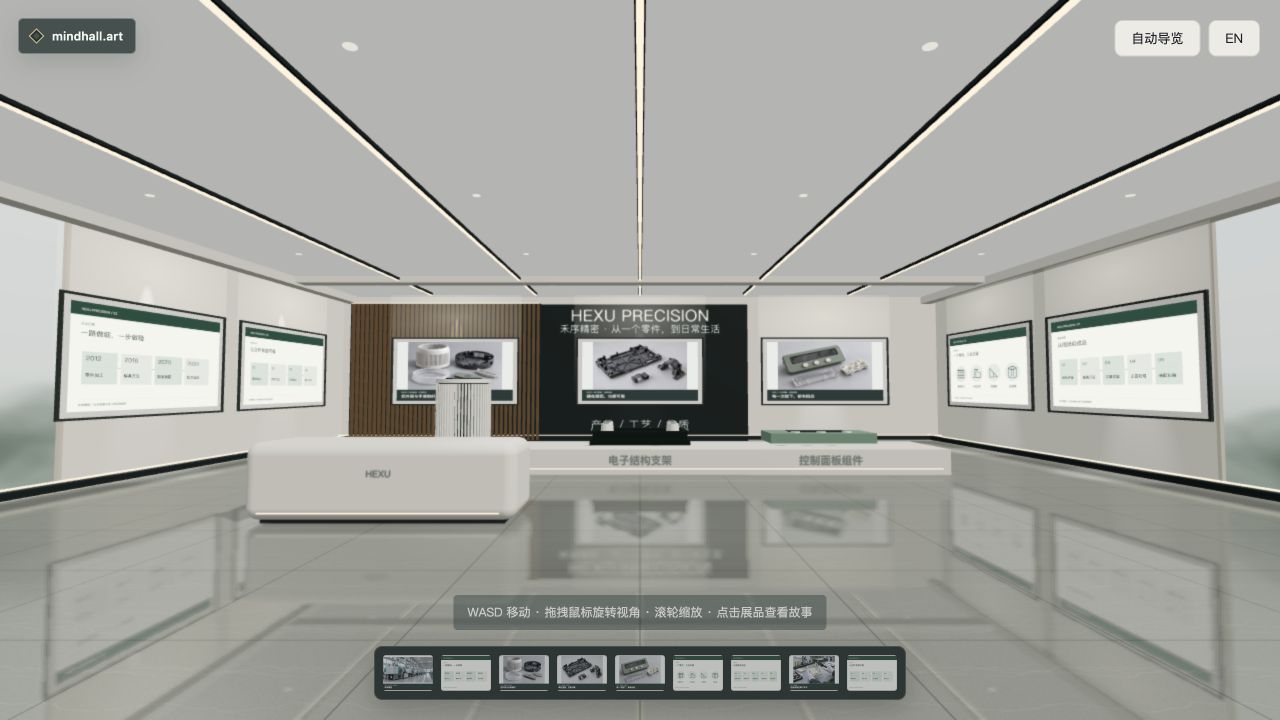
Hexu Precision: Starting with a Single Part
See how the method becomes a complete visitor journey before you start your own.
View the caseCan I make it with the editor?
The editor supports standard image and text galleries. Hexu includes custom fit-out, sample displays and spatial arrangements; it is not a one-click editor template.
Is Hexu a real client?
No. The company, history and product information are fictional, and some imagery is AI-generated. The case demonstrates exhibition design, not client business results.
Should every product be included?
Begin with products that represent your main applications and capabilities. A complete catalogue can remain supporting material.
What does a commission include?
Agree on exhibits, space, languages, interactions, publication and maintenance before work begins. Hosting, future updates and business-system integrations require explicit agreement.
What needs custom work
Company figures, certifications and customer names must be verified and approved for publication. Fictional sample content must not be reused as factual company publicity.
Discuss the exhibition you need
Bring your material and intended audience. We will agree on the scope before production.
Explore the studio services